Nature

A Gardener’s Secret Spot

In every garden, there are spots that every visitor notices. It’s like the main attraction at a circus or the most popular ride at a theme park. Everyone wants to see it and experience it. It’s the star of the show. This area of my garden is filled with a variety of annuals, but mostly perennials that burst with various shades of color throughout the summer. First, there are the beautiful purple globes of the allium and the amsonia, or storm cloud blue star, producing hundreds of small, star-like blue flowers that appear as if you are looking at a pillow of blue cotton. Then, as they fade, delicate white flowers of the penstemon shoot up in the same area, and the common yellow yarrow bursts forth with little handfuls of bright yellow blossoms. Finally, the “big boys” strut their stuff: daisies, fireweed, various coneflowers, and coreopsis fill the bed, and pink and red sun impatiens give the area its final touch.

However, that is not my favorite spot in my garden. It’s my secret spot where things grow that people rarely see. It’s a place of serenity that is inconspicuous yet perfectly balanced. My quest for mindfulness and calm is an ongoing journey for me that is often out of my reach. The main flower beds in my yard aren’t places of tranquility and peace; they are full of color and action, just like my mind most of the time. It’s the secret spot that reminds me to breathe and give myself time to sit and do nothing.

The secret spot is in the far corner of my yard, shaded by a large white oak and a sweet gum tree, both over 80 feet high. Beneath their canopy grow some of my favorite plants that only show their true colors for a short time. The first to bloom are several perennials in the hellebore family called the Lenten rose. Their blooms are subtle yet distinctive. Then, my favorite flowering shrub begins its brief debut in mid-April: the peony. I have five different types of peonies that have large, saucer-like blooms the size of a baseball glove. The colors are incredible, ranging from peach to pink to dark red. They’re just amazing.

One of my peonies

Then finally in the middle of May the bottle brush tree blooms these huge white columns of flowers that last through the end of June. They’re so unique.

Hopefully there is a secret spot in your life that you can rely on for some tranquility and peace. It can be anywhere not just in a garden. Just find it and cherish it. We all need that in our frenetically paced lives. Cheers!
Standard
Nature

The Best Book Light

Have you ever read something outside using the sun’s rays as your illuminator?

If you can find a spot where the sun hits the pages of your reading material from behind your shoulder, it’s just perfect. There’s no need for a lamp, sunglasses, or anything else. The light is the perfect color and intensity, which is calming to your eyes and your whole being. Try it sometime.

Standard
Life Lessons, Nature

Those “F…ING” Stairs!

There is a lakeside park near my house that features a series of staircases varying in length. These staircases wind their way through a path adorned with hills and trees, leading straight up a steep incline. There are more than 200 steps that ascend that formidable hill. The scenery is breathtaking, and the climb can be deeply fulfilling. However, it also forces you to confront your innermost fears and insecurities.

I have always had a strong passion for exercise. When I go without exercising for an extended period, I become cranky and irritable. Exercise has a calming effect on my mind, as it helps to slow down the constant racing of thoughts. This is particularly significant because even during the most serene moments, it is challenging for my mind to achieve a state of peace.

Yet, the steps are a different type of exercise. They are hard, no that is an understatement. They are so “F….ING” hard! Yea, that’s better.

I ask myself every time before I start going up and down the steps: are they too challenging? Should I do something easier? Am I getting too old or am I going to hurt myself by doing them? For now, the answer is always yes, I can do the steps.

How Hard Should I Push Myself?

Wow, this simple question encompasses so many aspects of one’s personality, including my own. How much is “enough”? I often find myself questioning whether I should push myself to the point of exhaustion by going up and down the stairs repeatedly, or if I should simply do enough to feel accomplished. Am I only considered successful if I surpass the person next to me in terms of repetitions? Should I take breaks after each climb? Why is it that some people can ascend or descend the stairs much faster than I can? Would I perform better if I were thinner? It’s interesting that at the age of 63, I still find myself pondering over these thoughts. When will I finally reach a point where I am satisfied with what I have accomplished? When can I genuinely say that it is enough?

It’s maddening to me that a simple set of stairs can stir up so many insecurities in me. You would think that by now, I would just be grateful that I can climb them. But no, it’s the competitive side in me that keeps pushing me forward. I’m never completely happy with the current situation. That part of my DNA has certainly helped me in many aspects of my life. Unfortunately, it also inhibits me from being content and satisfied with the present. It’s a constant battle.

Revisiting a post I published in May of last year titled, “What Makes Something a Living Thing?”

I wrote about whether inanimate objects, like stones, can be considered alive in some way? This thought frequently crosses my mind as I ascend and descend the steps. The steps are unyielding, yet oddly accommodating. They present a constant challenge, utilizing gravity to test my inner determination to persevere. However, descending the steps is a delightful experience, as if they provide me with a moment to observe and appreciate the sights and smells of the surrounding forest. During those fleeting minutes, they grant me inner tranquility before I embark on the climb once more.

It’s a Love Hate Relationship

I love doing the stairs, especially after completing the workout! It usually takes me about 50 minutes to go up and down the stairs 7 times. There was a time when I used to do 10 cycles of the steps three days a week, but that was a while ago. Now, I usually do it twice a week, and that feels like enough. Do you have any workout routines that you have a love-hate relationship with?

If you click the link below, it will take you to an inspiring story about a woman whose relationship with those “FU…ING” stairs is smiliar to mine.

https://www.ksdk.com/embeds/video/responsive/63-d9788837-8bd1-41ba-b929-46e34f2716b0/iframe

Standard
Nature

The Monarch Butterfly is Making a Comeback

One of the most striking and beautiful butterflies in my garden is the monarch. The size and color of their wings is so striking. You cannot miss them as they fly from flower to flower, sucking up nectar to gain strength before they begin their long migration back to Texas, Oklahoma, and Mexico in late fall. Sadly, I have noticed over the past several years they have been missing. Vanished. I’m not the first to be aware of their noticeable disappearance.

On July 21, 2022, the International Union for Conservation of Nature (IUCN) placed the migratory monarch (subspecies D. p. plexippus) on the IUCN Red List of Threatened Species, listing it as endangered, and noting that its primary threats are habitat destruction and climate change. The IUCN is an international group of government and civil society organizations headquartered in Switzerland. Announcing the decision, the IUCN noted that the migratory monarch, “known for its migrations from Mexico and California in the winter to summer breeding grounds throughout the United States and Canada, has shrunk by between 22% and 72% over the past decade. Legal and illegal logging and deforestation to make space for agriculture and urban development has already destroyed substantial areas of the butterflies’ winter shelter in Mexico and California, while pesticides and herbicides used in intensive agriculture across the range kill butterflies and milkweed, the host plant that the larvae of the monarch butterfly feed on.”

In its announcement, the IUCN continued: “Climate change has significantly impacted the migratory monarch butterfly and is a fast-growing threat; drought limits the growth of milkweed and increases the frequency of catastrophic wildfires, temperature extremes trigger earlier migrations before milkweed is available, while severe weather has killed millions of butterflies.” The IUCN noted that eastern and western populations are both in trouble. “The western population is at greatest risk of extinction, having declined by an estimated 99.9%, from as many as 10 million to 1,914 butterflies between the 1980s and 2021. The larger eastern population also shrunk by 84% from 1996 to 2014. Concern remains as to whether enough butterflies survive to maintain the populations and prevent extinction.”

This last week however as I was walking through my yard, and I noticed something I hadn’t seen in years, monarch butterflies. I am not the only one noticing their presence. Surprisingly, the number of monarchs observed across the country is the highest level seen in over 20 years! Scientist don’t really know why such a steep recovery, but all gardeners will take it. They are so delicate and beautiful. What a welcome reminder on how much they have been missed in my garden.

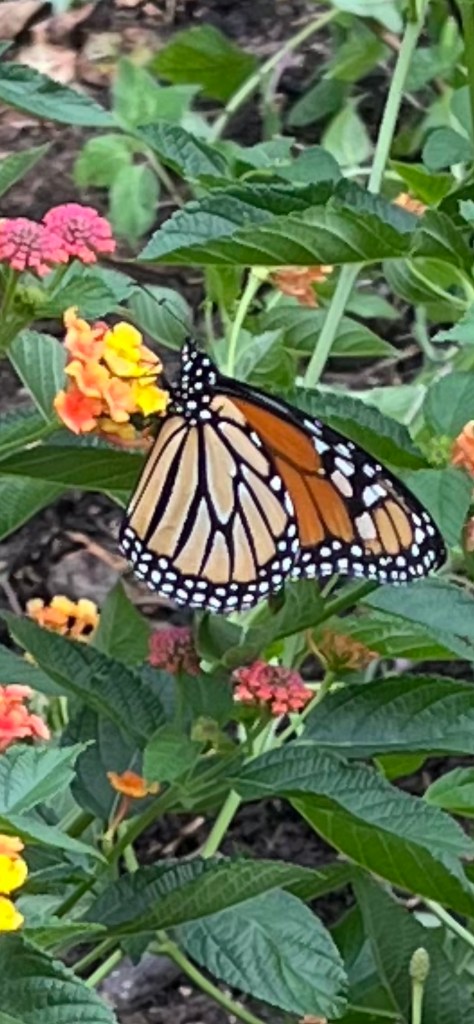
They’re not afraid of humans so I got really close and observed them probing one flower at a time. Here is my favorite photo as one sits on a flowering lantana.

Eastern Monarch Butterfly

Hopefully, this fall you have a chance to walk through a nearby garden and get to watch the monarch flutter and bounce from flower to flower. What a wonderful sight!

Standard
Nature

Daisies-The Perfect Perennial Flower

The Daisy

A Quick Plant Tutorial:

Before I explain why the daisy is my favorite flower, I want to clarify a couple of gardening terms that often confuse people. There are two main types of flowers: perennials and annuals. Both have their place in the garden for different reasons. Unless you live in a temperate climate, annuals are flowers that need to be replanted every year. This group includes popular varieties like marigolds, impatiens, zinnias, and geraniums. They are planted in the spring after the last frost and bloom profusely until the first frost in the fall, when they die. On the other hand, perennials come back every year, which is why they are called perennials. They are my favorite type of flowers because once you plant them in the correct spot, they will grow and multiply. Some common perennials include cone flowers, bee balm, peonies, black-eyed Susans, and daisies. However, perennials do not flower all summer like annuals. Once they are done blooming, they are finished until the following year. That is why it is important to plant a variety of perennials that bloom at different times, so you have flowers blooming all summer.

For the amateur gardener, the search for easy-to-grow flowers is always a challenge. I have tried so many varieties and seen many of them wither and die. At first, I would only plant annuals because they were easy to grow and they flowered all summer. However, I eventually grew tired of replanting them every spring. I wanted to have flowers that would come back every year and flourish. After a lot of experimentation with different perennials, the daisy has become my go-to flower!

The Daisy:

Bellis perennis (/ˈbɛləs pəˈrɛnəs/), the daisy, is a European species of the Asteraceae family, often considered the archetypal species of the name daisy. It can generally be grown in full sun to partial shade conditions, and requires little or no maintenance. It has no known serious insect or disease problems and can usually be grown in most well-drained soils.

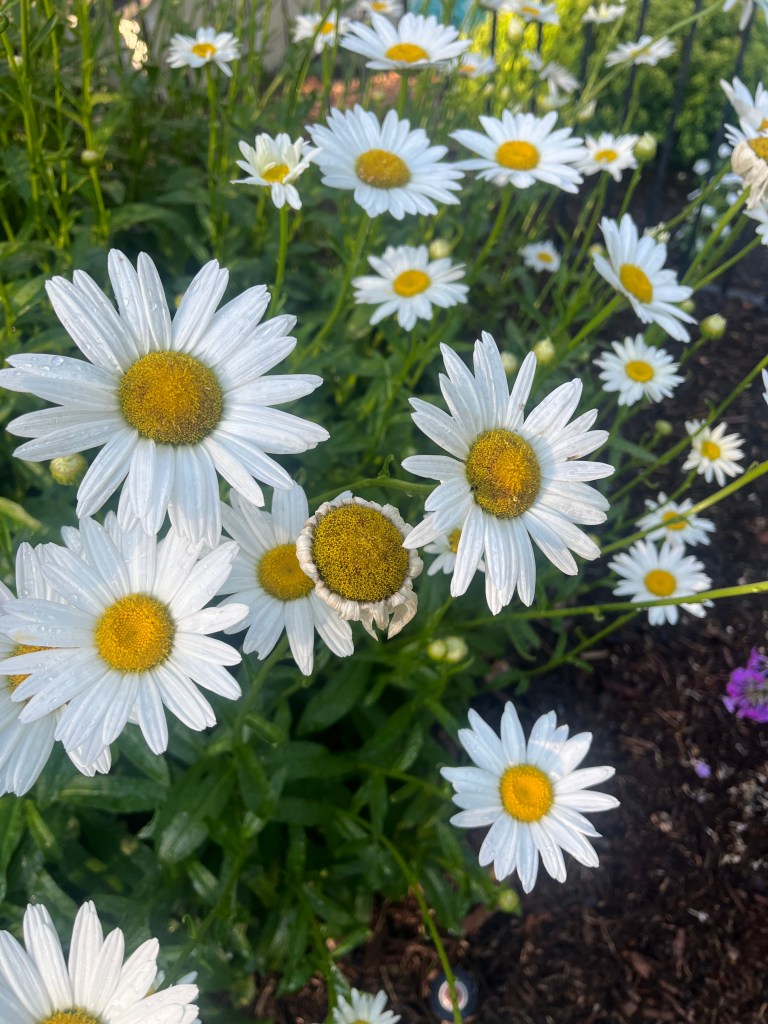
I have them all over my garden. I love the way every year they pop up from the beginning of May, and by the middle of June, the buds are about to burst open and expose these beautiful, perfect white blossoms with an explosive yellow center. The multiple layers of the white petals are mostly symmetrical, yet each one is unique. Once they bloom, they will keep on blooming from the middle of June until the end of August, which is a very long time for a perennial. They are also my favorite cut flower because they last at least a week once they are put in a vase.

The Plant That Keeps on Giving

Daisies are the easiest plants to separate. All you need to do is use your handy dandy shovel and pick a spot in your daisy patch, then push your shovel into the ground to separate the daisy plants. Then, take the separated piece and plant it in a different place in your garden. You just got a new plant for free!

There aren’t many things in the world that gets me more enjoyment than walking in my yard and observing the flowers in my garden. No plant gives me more joy than the daisy. They are so easy to grow. Go ahead and throw one into the ground and start your own love affair with the daisy!

Standard
Nature

What Makes Something a Living Thing?

I decided to add a stone border around one of my flower beds in my backyard and I was enamored by the strength and structure of how the interlocking stones made such a beautiful design. As I leveled out the ground to lay each stone side by side they took on a personality of their own. Just like a human. Could they be alive in someway?

That’s a good question…..

Since I’m not smart enough to answer it myself I started researching the subject. I asked the question. Can stones have a soul?

I stumbled on an excerpt from a book written by Dr. Jeffrey J Cohen Dean of the Humanities Department at Arizona State University. He calls himself a trained medievalist working in English, Latin, and French, working in the field of environmental studies. Dr. Cohen has published numerous books on using the teachings of scholars in medieval times to help us better understand the human condition. One of the chapters happened to ask the question, “Do Stones Have Souls?” After reading his thoughts it dawned on me that he was writing about something that resonated in my life.

Over the years I’ve taken several stones from special places that our family has visited. I would then set them on my desk like a little shrine. I would only choose the ones that for some reason or another were aesthetically pleasing. Some of the stones were smooth, others had crystals, while others had a peculiar color that made them unique. There they were all sitting on my desk, all of them picked up from different places yet they all had one thing in common. They brought me back to a beach, a hike, or a fishing trip that was extraordinary in some way. Those fond memories would spring back to life when I held one in my hand. They all would kind of speak to me. How could a stone do that? Was it living in some mysterious way?

Dr. Cohen, who is obviously way smarter than me wrote a whole chapter on the subject in one of his published books. Cohen goes on to cite the writings of the medieval scholar Albertus, an Aristotle disciple. Albertus argues that even though stones can’t reproduce or digest food they do have many qualities similar to humans. He writes, “as if there were in these things something pleasing to the stones, or a soul by which they were moved.” Stones radiate a potency that derives from substantial form along with the relative order of their constituent admixtures of elements with heat. Such lithic power is marvelous, mortal, innate and mobile. Even though Albertus insists that lithic power does not constitute being, rocky force does an excellent job of imitating life, especially when stone and human form an alliance. Corallus, for example, can staunch bleeding and protect against epilepsy. To wear corallus around the neck is to be guarded from storms, lightning and hail. Powdered and dissolved into water, it will fertilize herbs and trees, “multiplying their fruits.” Corallus connects human bodies, bodily fluids, the weather, and the vegetal world. Like all the stones Albertus describes in his alphabetical lapidary, coral is not a passive material to be harnessed to specific uses. Its virtue is innate, always emanating, always seeking the connections that will allow the rock to become an agent so powerful it can rebuff tempests, so fecundating it can compel the vegetal to superabundance. Coral’s force, moreover, encompasses an entire ecology: water permeates wood and petrifies through the power of place. Other stones act with similar vigor. Chryselectrum changes its colors during the course of the day. Because it fears fire, when held in the hand it reduces fever.”

I know I kind of went off on a tangent and got all philosophical on you but I wanted to expand on my feelings that when certain stones entered my life they had a special place in my heart. Can an inert object really do that without having some qualities of a living thing as we know it? Stones and humans are made up of many of the same substances. That connection is undeniable. The stones on my desk have a special place in my life. The memories that resurface when held in my hand make me smile and recollect on the wonderful times that my family had together. None of them were picked by accident. They might not be described as living in the typical sense but in my eyes they have a power that blurs the lines between what makes something living. I guess after reading Dr. Cohen’s article that debate has been raging for centuries. Who would of known? You learn something new everyday!

Standard
Life Lessons, Nature

Less is Often More

Working out in my yard is one of my biggest passions. I love doing all parts, from trimming bushes, to design, to just weeding. I just can’t get enough. One of my favorite things to do in the springtime was to go to a nursery and buy something new. It was like a drug and I would keep adding more and more stuff. It was pretty symbolic of my life in my 30s and 40s. I just couldn’t get enough of everything. I was never completely happy with the status quo.

Over the years as everything continued to grow the plants became more and more crowded. My goal was to build a zen like garden but it looked more like a mishmash of shrubbery and trees that had no flow or balance. It was just too much.

Since I never wanted to kill any of my plants I would move them from placed to place trying to come up with a sense of serenity and form. Not surprisingly, it didn’t work. Everything changed however when I began to take things away.

Most people have the same issues especially when they are trying to build their lives into something. That “something” is different for everyone yet the wanting for more and more is a pretty common trait in all of us. Especially from your late 20s through your 40s.

For most of my adult life I would be continually adding more and more things to my personal landscape like I did in my yard. I would say yes to everything. I thought the more activities that I got involved with and the more times I would go out with my friends and other couples the happier I would be. In other words, more was always better. I have written a lot about my 30s and 40s because those tend to be the most tumultuous times in many people’s lives. It certainly was for me. There is an old saying when describing someone like me at that time in my life. “That person can’t see the forest from the trees”. I have always struggled with being happy with the status quo. Luckily as I got older I realized that if I didn’t start “pruning” things out of my life it would end in ruin. I wish I could’ve done all of the personal work myself but honestly my therapist and just getting older helped a lot. It’s still a work in progress.

Ok enough about me and back to my garden. As I began to take things out of my yard and not plant so many flowers and bushes the remaining vegetation had space to breathe. I began to appreciate that if I planted less or removed certain shrubbery the yard began to be a sanctuary of calmness. The simpler the landscaping became the more mature it looked in a beautiful way. The clutter was gone. It was easy to appreciate the space between each tree or shrub. I didn’t have to always be thinking of what to add to make it better. It was just better to let it be. Less was better.

Now the yard just needs small tweaks annually to keep it in tip top shape. The years of big additions are in the past. That’s kind of what happens to most people in their 50s and beyond. It’s a time to enjoy just being in the present.

That inner peace is something that younger people can have in their lives too. They don’’t have to wait. Trust me more and more is not better. Be happy of what you have and take time to enjoy the journey because that is the best part of being alive. Less is Often More!

Standard
Nature

THE DELPHINIUM AND THE BEE

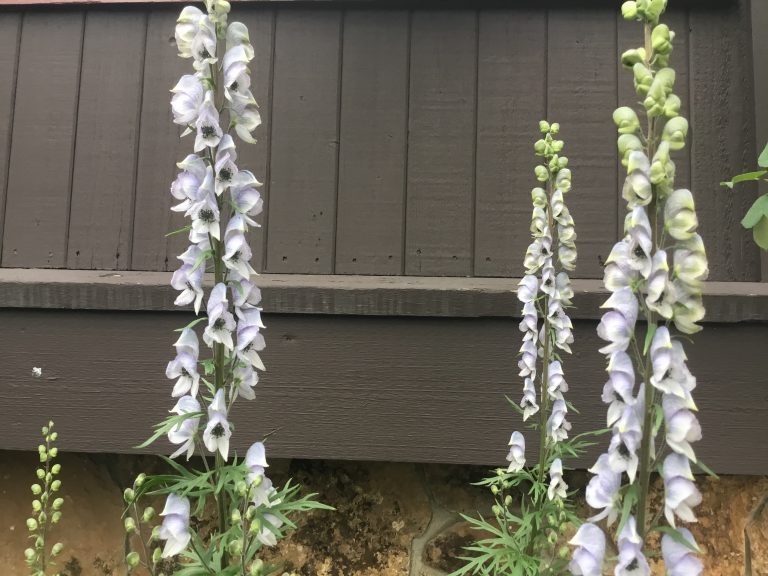
Several delphiniums bloomed recently outside our house. They are one of my favorite mountain flowers because of their intricate blooms. Each bloom has it’s own pocket of pollen waiting to be sucked up and carried away by a hungry bee. Unlike other flowers like the daisy which have a single bloom that is easily accessible for the bee, the delphinium is another matter. I watched a bee systematically start at the bottom of one of the stalks and dive into each bloom one by one. Since the blooms are so deep the bee vanishes each time once inside the flower. All I could see see was the flower shaking from the outside. Once the pollen is accumulated the bee then moved up to the next one and started the process all over again until all of the blooms were visited. It was quite a site!

Standard
Life Lessons, Nature

WHEN LESS IS MORE

I love gardening. It’s one of my favorite things to do. When I was younger I always wanted to continually add more and more flowers and shrubs to my yard. I could never get enough. It was like a drug. Until one day, I looked around and saw it was so cluttered. The beauty of the plants were hidden by their sheer number. So, I decided to begin to subtract things from my garden. The beauty and simplicity of the shapes and simple lines of the design just “popped” in front of my eyes. It was aesthetically pleasing as well as beautiful.

It’s the same in life too. When we are young it’s very easy to want to accumulate and accumulate more stuff. It becomes hard to see the beauty in any of it. As one peels away all of the excess and keeps the things that truly matter the beauty and a sense of tranquility unfolds!

Standard
Nature, People

FLY FISHING

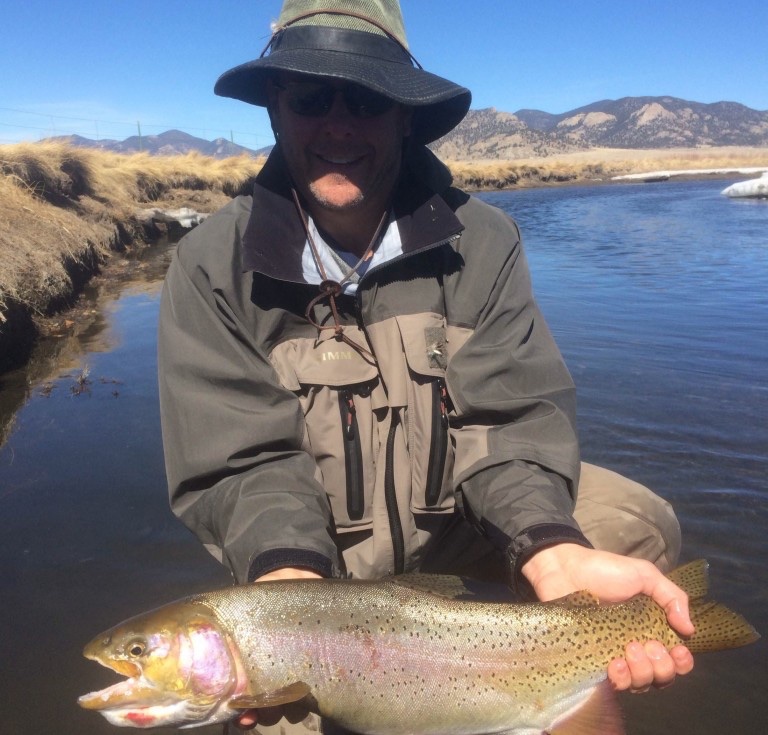
Have you ever tried fly fishing? If you haven’t I would highly recommend it. Here’s why. If you like being in beautiful places and doing something that takes your mind completely away from your daily routine fly fishing is the answer. To me, it’s the easiest way of clearing my mind of all thoughts the way meditation is supposed to make you feel. The focus on your fly and the water is so calming to the brain.

I haven’t even mentioned the beauty of the trout you are trying to fool with a little fake bug . They are covered with a plethora of colors that is hard to describe.

It’s also a great way to spend quality time with your kids, a loved one, or a good friend in such a unique environment that makes every trip so special. It’s great bonding time. I hope you have a chance to try it once in your life. I bet you’ll be hooked!

Standard